Newsletter Subscribe
Enter your email address below and subscribe to our newsletter

 ByJohn A
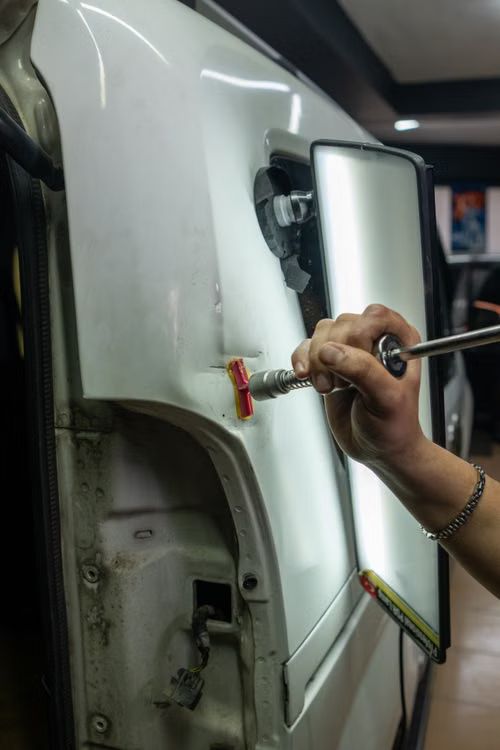
Someone taps your rear bumper at a light on Folsom Boulevard. The damage looks small, maybe a cracked cover and a scuffed quarter panel. If you drive a gas car, you already know roughly what happens next. With an electric car, an auto body shop follows a different sequence, and several steps happen before anyone picks up a tool. The battery pack sits under the floor of most electric vehicles, so impacts that look cosmetic still get treated as possible structural events.
Plenty of owners assume an auto body shop handles an EV the same way it handles a sedan, just with more weight on the lift. Not quite. The pack carries hundreds of volts, the surrounding structure protects it, and manufacturers publish procedures technicians follow rather than work around.
With a gasoline car, a technician can usually start pulling panels right away. An EV gets a different opening move.
NHTSA advises treating the high-voltage battery and its related components as energized and fully charged after any crash. That assumption carries into the repair bay. Turn off the high-voltage system using the manufacturer’s published procedure for that exact model before you cut, weld, or sand.
Orange cabling runs through these cars for a reason. Anything orange stays live until proven otherwise. Nobody guesses their way past it.
See also: What Is Web3 and Why Does It Matter?
Here is the part most owners have never heard about. Federal guidance says a severely damaged vehicle with a lithium-ion battery should not be stored inside a structure or within fifty feet of any building, vehicle, or combustible material.
That creates real logistics work for a shop. A car with suspected pack damage cannot just park in the back row beside twenty other repairs. It needs distance, ventilation, and someone checking on it.
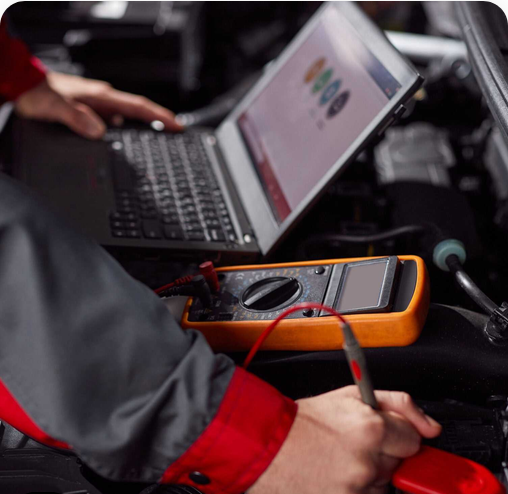
Technicians watch for specific warning signs during intake and storage:
Delayed fire is a documented risk with damaged lithium-ion batteries. A pack that reads fine on Monday can behave differently by Thursday. That one fact probably explains why careful shops move slowly on EV intake even when the dent looks minor.
Electric vehicles use a lot of aluminum, high-strength steel, and structural adhesive. Those materials do not tolerate improvisation. Heat that would be harmless on an older steel unibody can weaken a modern structural member.
Manufacturers publish repair procedures that say which sections may be sectioned, which must be replaced whole, and what heat limits apply. A shop working without those documents is working blind.
Relux Collision uses AirPro Diagnostics, which gives technicians in-house access to OEM software and current repair information. The blueprinting stage happens after disassembly, which typically takes one to three hours, and that blueprint goes to your insurer before parts get ordered.
Does that add time? Sometimes, yes. The alternative is a repair that looks correct and performs badly in the next collision.
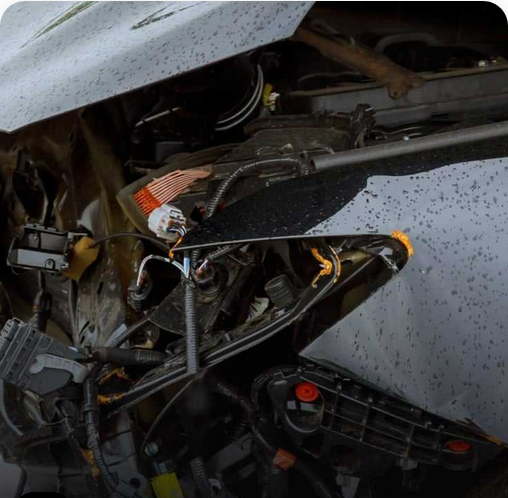
Electric vehicles carry a dense sensor load. Cameras, radar units, and ultrasonic sensors feed lane systems, automatic braking, and parking assistance. Many of those sensors mount in or behind the exact panels that get replaced after a hit.
A bumper cover swap on a car with front radar is not finished when the paint cures. The system needs recalibration, and the vehicle needs a post-repair scan to confirm no fault codes remain.
Relux Collision offers diagnostic scanning and calibration services as part of the repair process, along with an electrical scan during the initial damage assessment. Skipping that step leaves you with a car that drives normally until a safety system fails to see something.
Once the structural and electrical work clears, an EV goes through refinishing like any other vehicle. Relux Collision mixes paint from your factory paint code using BASF color data, then blends into surrounding panels so the repair matches, including metallics and pearls.
Reassembly, inspection, and cleanup follow. You get text updates through the stages, and the shop coordinates your Enterprise rental return at pickup if you used one.
The team holds I-CAR Gold Class recognition, and completed repairs carry a limited lifetime warranty. Deductible assistance of up to $1,000 is available through the Relux Cash Back program, which helps when an EV repair estimate runs higher than you expected.
Bring your electric vehicle to the Asher Lane facility in Sacramento and get a free estimate before you decide anything.